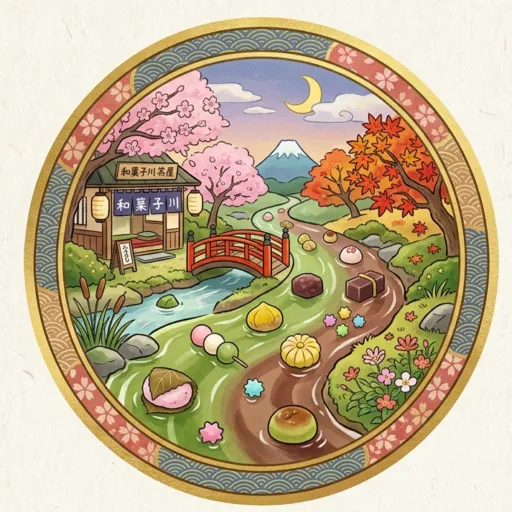
- Wagashi and Aesthetics: The Profound and Simple Beauty of Japanese Confectionery
- The Essence of Simplicity and Depth
- Seasons as the Muse
- The Art of Form and Texture
- Materials and Their Significance
- The Philosophy of “Wabi-Sabi”
- Beyond Visual Appeal: A Multi-Sensory Experience
- The Aroma of Nature
- The Sound of Tradition (and Silence) While wagashi itself is silent, the context in which it is enjoyed often involves quiet contemplation. The gentle rustle of washi paper used for wrapping, the subtle clink of a ceramic tea bowl, and the overall atmosphere of a tea ceremony contribute to the sensory experience. The appreciation of wagashi often calls for a moment of quietude, allowing for deeper engagement with its subtle complexities. The Role in Japanese Culture
- Gifts and Gratitude
- Celebrations and Rituals
- The Artistry of Wagashi Makers
- まとめ
Wagashi and Aesthetics: The Profound and Simple Beauty of Japanese Confectionery
The Essence of Simplicity and Depth
Wagashi, the traditional Japanese confectionery, transcends its role as mere dessert. It is an art form deeply intertwined with Japanese aesthetics, embodying a philosophy of simplicity, subtlety, and harmony with nature. Unlike Western sweets that often prioritize overt sweetness and elaborate decoration, wagashi seeks to evoke a profound sense of beauty through understated elegance and a deep connection to the ephemeral.
Seasons as the Muse
The most striking aspect of wagashi’s aesthetic is its profound connection to the changing seasons. Each wagashi is a miniature representation of the natural world, meticulously crafted to capture the essence of a particular time of year. From the delicate cherry blossoms of spring to the vibrant maple leaves of autumn, and the serene snowflakes of winter, wagashi artists draw inspiration from the transient beauty of nature, allowing consumers to savor the season through taste, texture, and visual appeal.
Spring’s Awakening
Spring wagashi often feature motifs like cherry blossoms, plum blossoms, and young leaves. The use of light, pastel colors – pink, white, pale green – immediately evokes the freshness and renewal of the season. Ingredients like anko (red bean paste) are often blended with delicate flavors such as yomogi (mugwort) or sakura (cherry blossom extract), offering a subtle sweetness that complements the visual lightness.
Summer’s Bounty
Summer wagashi embrace the vibrant energy of the season. They often incorporate refreshing flavors and cooling textures. Kuzumochi (arrowroot starch jelly) and mizu yōkan (chilled red bean jelly) are popular, their translucent qualities and smooth textures evoking the coolness of water. Colors tend to be brighter, with greens, blues, and yellows dominating, reflecting lush greenery and sunny skies. Fruit flavors, such as ume (plum) and peach, also become more prominent.
Autumn’s Harvest
Autumn wagashi are a celebration of the harvest and the rich colors of the season. Warm hues of orange, red, brown, and gold dominate. Motifs include maple leaves, persimmons, chestnuts, and chrysanthemums. Ingredients like chestnut paste and sweet potato are frequently used, offering a comforting and grounding sweetness. The texture might become slightly chewier or more robust, mirroring the earthiness of autumn produce.
Winter’s Serenity
Winter wagashi evoke a sense of quiet beauty and stillness. Designs often feature snowflakes, plum blossoms (which bloom in winter), and bamboo. Colors are typically more subdued, with whites, silvers, and deep blues creating a serene and tranquil atmosphere. Flavors might lean towards comforting and warming notes, though the emphasis remains on subtlety. The delicate sweetness can be seen as a gentle contrast to the cold outside.
The Art of Form and Texture
Beyond seasonal motifs, the very form and texture of wagashi are integral to its aesthetic. The ideal wagashi is not only visually appealing but also offers a pleasing tactile and gustatory experience. Artists strive for a balance between precision and imperfection, imbuing each piece with a sense of handcrafted care.
Subtle Shapes and Sculpting
The shapes of wagashi are rarely ostentatious. Instead, they are often organic, flowing, and suggestive. A gentle curve, a delicate fold, or a perfectly rounded form can speak volumes. The artistry lies in the sculptor’s ability to convey a specific image or feeling with minimal manipulation. For instance, a simple dusting of powdered sugar can suggest fresh snow, while a finely etched line can represent a ripple on water.
The Dance of Textures
Texture is as important as form and flavor in wagashi. The interplay of smooth, chewy, soft, and slightly crisp textures creates a complex and engaging sensory experience. Mochi (rice cake) provides a satisfying chewiness, while yōkan offers a smooth, gelatinous mouthfeel. Nerikiri, a dough made from white bean paste and gyuhi (a soft mochi), allows for intricate sculpting and a delicate, melt-in-your-mouth quality.
Materials and Their Significance
The choice of ingredients in wagashi is never arbitrary. Each element is selected for its flavor, color, texture, and symbolic meaning.
The Heart of Sweetness: Anko
Anko, the sweet red bean paste, is the cornerstone of many wagashi. Its versatility in terms of sweetness and texture (from smooth koshian to chunky tsubuan) makes it a fundamental ingredient. The subtle, earthy sweetness of anko is a characteristic flavor profile that distinguishes wagashi from overtly sugary Western confections.
Flour and Grains: The Foundation
Various flours and grains form the structural basis of wagashi. Rice flour (mochigomeko) is essential for creating the chewy texture of mochi and gyuhi. Wheat flour is used in monaka, a wafer-like casing filled with anko. Kuzu (arrowroot starch) lends a translucent and gelatinous quality to jellies.
Natural Colors and Flavors
Wagashi artists utilize a range of natural ingredients to achieve their characteristic colors and flavors. Matcha (green tea powder) provides a distinct green hue and a slightly bitter, earthy flavor. Saffron can be used for vibrant yellow. Sakura powder imparts a delicate floral note and a pinkish tint. The emphasis is always on natural, subtle flavors that complement rather than overpower.
The Philosophy of “Wabi-Sabi”
The aesthetic principles underlying wagashi are deeply rooted in Japanese philosophy, particularly wabi-sabi. This worldview embraces imperfection, transience, and incompleteness. In wagashi, this translates to an appreciation for the natural variations in ingredients, the subtle asymmetry in designs, and the fleeting beauty of a seasonal delicacy.
Embracing Imperfection
Unlike mass-produced items, wagashi often carries the subtle imprints of the artisan’s hand. A slight indentation, a trace of a tool, or a barely perceptible variation in color can be seen not as flaws, but as testaments to the human touch and the unique journey of creation. This acceptance of imperfection aligns with wabi-sabi’s veneration of authenticity and natural processes.
The Beauty of Transience
Wagashi is inherently ephemeral. It is designed to be enjoyed in the moment, its beauty tied to its freshness and seasonal relevance. The act of consuming wagashi becomes a mindful practice, an appreciation of the present and an acknowledgment of the natural cycle of creation and dissolution. This focus on transience imbues wagashi with a poignant beauty.
Beyond Visual Appeal: A Multi-Sensory Experience
While visually stunning, the appeal of wagashi extends far beyond its appearance. It is a carefully orchestrated multi-sensory experience designed to engage all the senses.
The Aroma of Nature
The subtle aromas of wagashi are an integral part of the experience. The gentle scent of red bean paste, the faint fragrance of sakura, or the fresh, earthy notes of matcha all contribute to the overall sensory tapestry. These aromas are never strong or artificial, but rather delicate whispers of the natural ingredients used.
The Sound of Tradition (and Silence) While wagashi itself is silent, the context in which it is enjoyed often involves quiet contemplation. The gentle rustle of washi paper used for wrapping, the subtle clink of a ceramic tea bowl, and the overall atmosphere of a tea ceremony contribute to the sensory experience. The appreciation of wagashi often calls for a moment of quietude, allowing for deeper engagement with its subtle complexities. The Role in Japanese Culture
Wagashi holds a significant place in Japanese culture, serving as more than just a treat. It is a symbol of hospitality, a gesture of respect, and a conduit for expressing emotions and celebrating important occasions.
Gifts and Gratitude
Giving wagashi is a common way to express gratitude, apologize, or simply convey goodwill. The careful selection and presentation of wagashi reflect the giver’s thoughtfulness and respect for the recipient. The aesthetic beauty of the wagashi itself becomes a form of silent communication, conveying care and appreciation.
Celebrations and Rituals
Wagashi are integral to many Japanese celebrations and rituals, from New Year’s to Obon and seasonal festivals. Each occasion often has specific types of wagashi associated with it, further strengthening their cultural significance. For example, mochitsuki (rice pounding) is a traditional New Year’s activity that produces mochi, a staple wagashi.
The Artistry of Wagashi Makers
The creation of wagashi is a highly respected craft, passed down through generations. Wagashi makers are not simply cooks; they are artists, artisans, and custodians of tradition.
Meticulous Craftsmanship
Each wagashi is a testament to meticulous craftsmanship. The precise shaping, the delicate coloring, and the careful arrangement of ingredients require years of dedicated practice and a deep understanding of both culinary techniques and aesthetic principles. The pursuit of perfection within the framework of simplicity is the hallmark of their skill.
Innovation within Tradition
While deeply rooted in tradition, modern wagashi makers are also exploring new avenues of creativity. They experiment with novel ingredient combinations, contemporary designs, and innovative presentation methods, all while remaining respectful of the core aesthetic values that define wagashi. This balance between preserving tradition and embracing innovation ensures the continued relevance and evolution of this exquisite art form.
まとめ
Wagashi embodies a profound and simple beauty that resonates deeply with Japanese aesthetic sensibilities. Its essence lies in its harmonious connection to nature, its masterful evocation of the changing seasons, and its meticulous craftsmanship. Through subtle shapes, delicate textures, and natural flavors, wagashi offers a multi-sensory experience that engages the mind and spirit. It is a reflection of the philosophy of wabi-sabi, celebrating imperfection, transience, and the beauty of the natural world. As a cultural emblem of hospitality and tradition, wagashi continues to captivate with its understated elegance and its ability to transform simple ingredients into edible works of art.
